
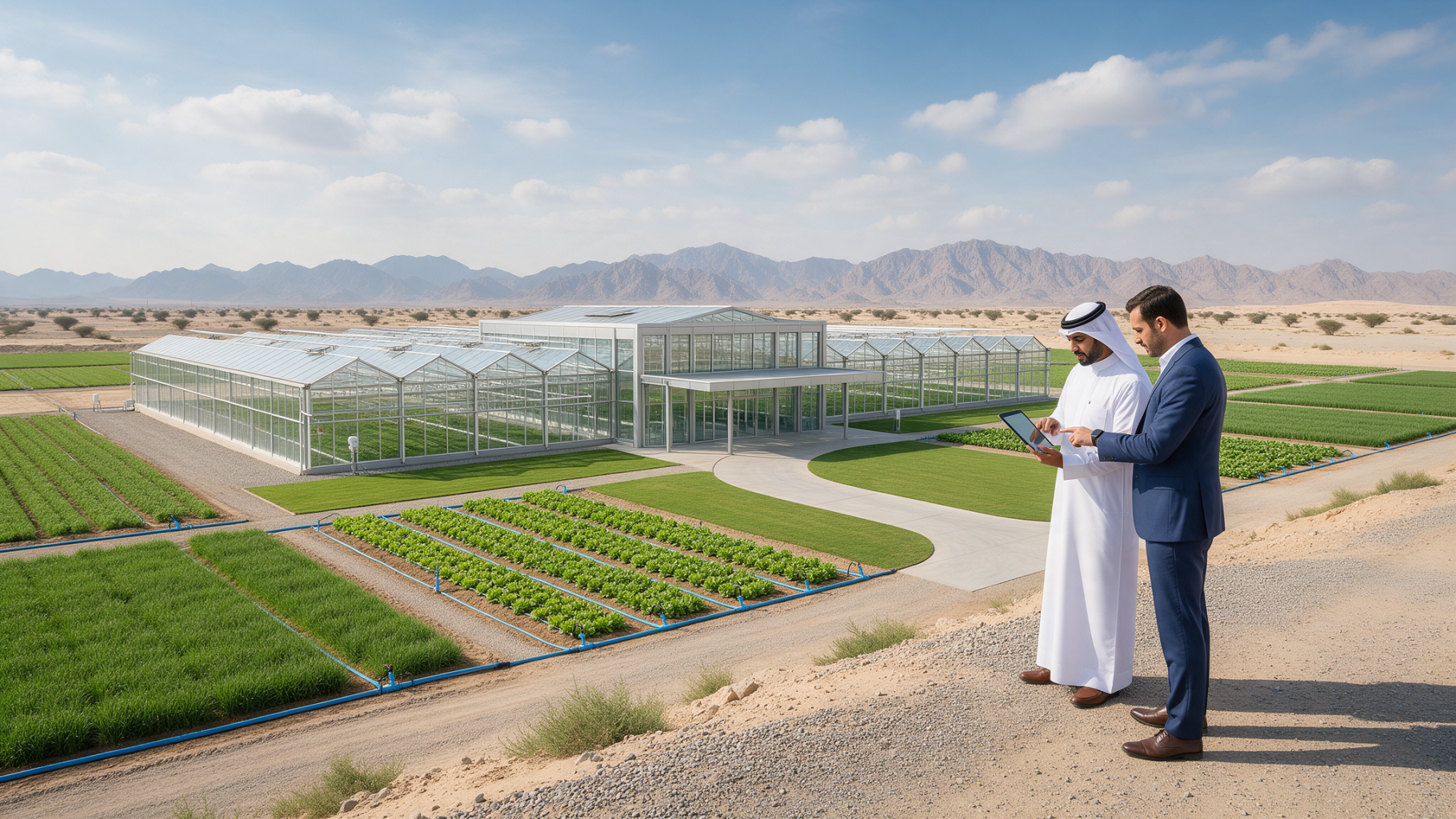
An agricultural venture in Saudi Arabia begins before the first crop is planted or the first animal arrives. Investors must establish which approvals apply, whether their site is suitable, and when operations can begin. This guide explains how to move from an investment concept to a licensed business.
Key Takeaways
- Agricultural permissions depend on the activities and facilities involved.
- MISA investment registration, commercial registration, and MEWA approvals have distinct purposes.
- Naama provides a digital channel for agricultural activity licensing.
- Certain projects require separate permissions to construct and operate.
- Site checks and consistent documentation should come before major commitments.
- Banking, employment, and compliance arrangements matter after approval.
1. First, Identify What Your Company Will Actually Do
Agricultural business can describe several commercial models. A vegetable grower has different obligations from a company selling irrigation equipment or processing food. Greenhouses, poultry facilities, and fish farms may also follow different licensing routes.
Before applying for Saudi business licensing, describe the activities that will generate revenue. Will you cultivate, breed, process, trade, install equipment, or provide advisory services? Where activities overlap, check whether other regulators must approve them. Precise descriptions prevent mismatches between company records and actual operations.
If your business will both grow produce and import equipment, assess each revenue stream rather than assuming one approval covers everything.
2. Understand the Three Regulatory Layers
Separate permission to invest, permission to establish a company, and permission to perform an agricultural activity.
Foreign investors generally must register with the Ministry of Investment (MISA) under the updated Investment Law. The term MISA license still appears in business discussions, but investment registration is not itself permission to operate a farm.
Following the applicable investment registration, investors can obtain Commercial Registration (CR) through the Ministry of Commerce. The Ministry of Environment, Water and Agriculture (MEWA) handles agricultural permissions relevant to the project.
Additional approvals may apply. Incorporation fees and company paperwork should therefore be budgeted separately from farm construction, technical reviews, and facility-specific permits.
3. Apply at the Right Stage of Development
MEWA offers agricultural activity licensing through Naama, an electronic platform used to record and license relevant activities. The ministry explained the service in its agricultural licensing announcement.
Some facilities require approvals in stages. A livestock development, for example, may need an initial clearance, a construction license, and an operational license.
Authorization to build a facility does not automatically authorize production. If the project changes activities or its proposed scope during development, check whether the existing approval must be amended.
Do not treat Saudi company registration as the final step. Map permits before setting construction dates, ordering equipment, or promising customers a launch date.
4. Test the Site Before Signing a Long-Term Commitment
The right company structure cannot compensate for an unsuitable location. Site selection affects water access, utilities, logistics, waste handling, and environmental requirements. Animal facilities may face hygiene and biosecurity conditions.
For project planning, the question is whether the intended activity can legally operate at the location, not simply whether land is available.
Check land-use and technical conditions before committing capital. Align leases and construction milestones with approval stages.
5. Build a Consistent Application File
Consistent records reduce rework. Foreign corporate applicants may need overseas commercial registration, financial statements, ownership information, and details of authorized representatives.
Agricultural applications may also require site information, facility plans, or production details.
During Saudi business incorporation, some overseas records may require authentication. Check each service’s document and translation requirements. Ensure every document describes the same proposed activities, ownership, and location.
6. Prepare for the First Day of Operations
A sector permit is a milestone, not the only obligation. Operating readiness may also involve banking, tax registration, recruitment, employee records, and social insurance. Review applicable labor and Saudization requirements.
Employers may need GOSI registration, and government relations support can help coordinate administration.
Assign responsibility for permit conditions, record updates, and renewals to avoid preventable interruptions. A compliance calendar can put administrative deadlines, employee registrations, and relevant inspections under named owners.
7. Avoid Delays That Begin Before the Application
Delays are not always caused by missing forms. Selecting an incorrect activity, committing to an unsuitable site, or ordering equipment before checking permit conditions can disrupt a launch.
An effective Saudi market entry plan has checkpoints: validate the business model, confirm investment requirements, review the site, and follow the applicable permit stages.
Costs and timelines depend on the project, so avoid assuming immediate approval.
Bring Your Agricultural Plans to Market With Al Taasis
At Al Taasis, we help investors coordinate company establishment, investment registration, sector licensing, government procedures, banking assistance, and employee management. Our Saudi business setup services connect legal registration with operational needs, helping you avoid unnecessary administrative delays.
Planning a farm, greenhouse, livestock facility, or agricultural services company? Contact Al Taasis for guidance tailored to your project.

Subscribe to Our Newsletter!
Enter your email to receive our monthly newsletter.