
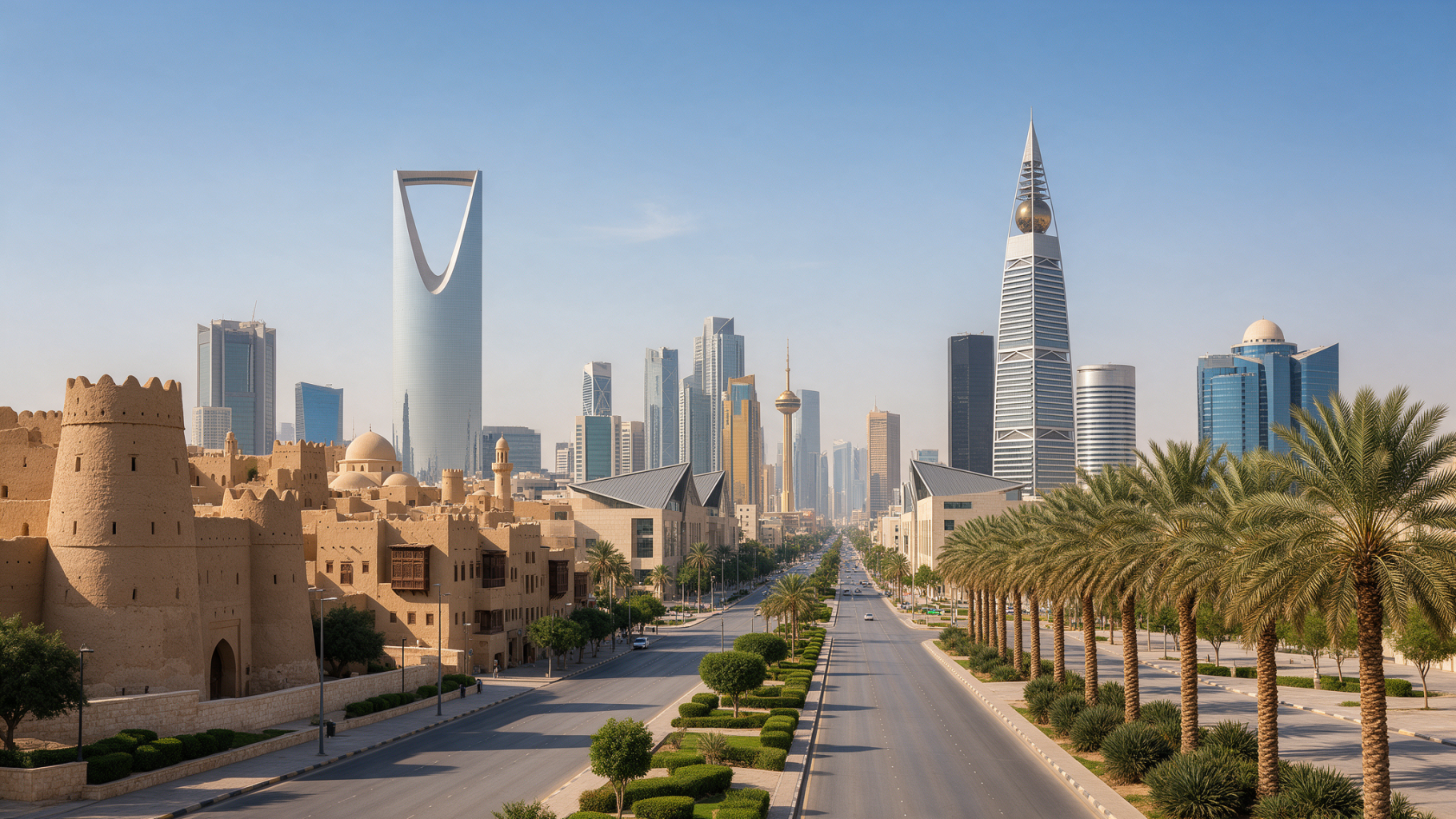
Saudi Arabia’s economic transformation is creating a broader and more diversified market for international companies. Vision 2030 is not only changing where investment is going. It is reshaping the business environment, developing new industries, encouraging foreign participation, and raising the importance of having the right local operating structure.
1. Vision 2030 Is Expanding the Addressable Market
Vision 2030 is designed to diversify the Saudi economy, increase private-sector participation, attract foreign investment, and develop new sources of economic growth. The IMF’s 2026 Article IV consultation noted that the reforms have strengthened the non-oil economy, expanded the role of the private sector, and advanced economic diversification.
For companies evaluating Saudi market entry, this means demand is increasingly spread across a wider economic base. Technology, tourism, logistics, manufacturing, mining, healthcare, financial services, infrastructure, and advanced industries are all receiving greater attention alongside established energy sectors.
The opportunity still varies significantly by industry. International businesses need to understand where their product or service fits, whether the activity is open to foreign investment, and what commercial demand exists before committing to a local operation.
2. The Investment Environment Is Becoming More Structured
Saudi Arabia’s updated Investment Law came into force in 2025 and introduced a unified framework covering local and foreign investors. Among its provisions are equal treatment under similar circumstances, investor protections, and a registration framework for foreign investors, subject to applicable sector rules and restricted activities.
For investors looking to start a business in Saudi Arabia, this creates a more structured route into the market, but incorporation is not necessarily a single registration.
Depending on the activity, a business may need investment registration, Commercial Registration, sector approvals, tax registrations, employment files, premises-related approvals, or other government registrations before becoming fully operational.
The important question is therefore not simply whether Saudi Arabia welcomes foreign investment. Businesses must determine which structure and regulatory pathway apply to what they actually intend to do.
3. Opportunity Is Spreading Across Priority Sectors
Vision 2030 specifically targets growth across non-oil industries, including mining, manufacturing, tourism, the digital economy and other emerging sectors. Recent international investment activity also includes artificial intelligence, cloud technology, industrial development, infrastructure, financial services, and energy-related projects.
Foreign investment figures underline that interest. Saudi Gazette reported in August 2026 that inbound FDI reached SR136 billion in 2025, while net FDI inflows increased to SR122 billion, citing UNCTAD and official Saudi data.
A strong Saudi business setup strategy should therefore begin with sector fit rather than incorporation paperwork. Businesses need to identify where Saudi economic priorities, customer demand, investment activity, and their own competitive advantage intersect.
4. Local Presence Is Becoming More Important
Vision 2030 is also encouraging international companies to establish deeper operations inside the Kingdom. One visible example is the Regional Headquarters Program. In August 2026, the Ministry of Investment said more than 750 companies had joined the program, surpassing its original target of 500 by 2030.
The RHQ framework does not mean every international business needs a regional headquarters. Its relevance depends on the company’s activities, regional structure, customers, and contracting strategy. Saudi rules concerning certain government contracting opportunities have nevertheless made local presence particularly important for some multinational companies.
For businesses planning to open a company in Saudi Arabia, entity selection should therefore be a commercial decision as much as a regulatory one. A subsidiary, branch, RHQ, or another permitted structure may serve very different objectives.
5. Growth Comes With Local Employment Responsibilities
Successful expansion requires more than obtaining a business license. Employers must also manage workforce requirements, immigration, payroll, social insurance, government platforms, tax obligations, and ongoing regulatory compliance.
Saudization compliance is an important part of workforce planning. Saudi Arabia’s Nitaqat framework calculates localization requirements based on factors including an establishment’s activity and workforce composition, while specific localization rules can also apply to particular professions.
International businesses should therefore consider their expected headcount and hiring model before launch. Incorporating first and solving employment requirements afterward can create unnecessary operational complications.
6. Plan the Operating Model Before Registration
Before beginning Saudi company registration, businesses should define exactly what the Saudi entity will do. That includes its licensed activities, ownership structure, customers, expected workforce, premises, banking needs, contracting arrangements, and any sector-specific approvals.
Companies should also plan what happens after incorporation. Opening a corporate bank account, completing tax and employment registrations, arranging visas, managing government portals, onboarding staff, and maintaining licenses all form part of establishing a sustainable operation.
Vision 2030 can create the commercial opening, but capturing that opportunity depends on building the right structure around the business.
Turn Vision 2030 Opportunity Into a Saudi Expansion Plan
Al Taasis helps international companies translate market opportunity into a practical establishment and operating plan. Our support covers Saudi business incorporation, licensing and investment registration, Commercial Registration, corporate banking assistance, GRO services, employee management, visa and immigration requirements, and ongoing corporate support.
If your company is considering Saudi Arabia as its next growth market, speak with the Al Taasis team to understand the structure, registrations, and operational support required for your planned activities.

Subscribe to Our Newsletter!
Enter your email to receive our monthly newsletter.